
School Medicaid
School Medicaid FAQs
Answers to common questions about how School Medicaid works, who participates,
what Medicaid can reimburse and why program requirements differ across states.
SCHOOL MEDICAID FAQ
School Medicaid Basics
Understand the fundamentals of School Medicaid, including how programs work, why schools participate and why requirements vary from state to state.
School Medicaid refers to the ways Medicaid can provide federal reimbursement for certain health related services and administrative activities delivered or supported by public education agencies. School Medicaid operates within the broader Medicaid program rather than as a separate federal program.
School Medicaid generally includes two broad types of reimbursement: direct service billing, which can reimburse eligible health related services provided to students, and Medicaid Administrative Claiming, which can reimburse certain administrative activities that support the Medicaid program. Depending on the state, public education agencies may participate in one or both.
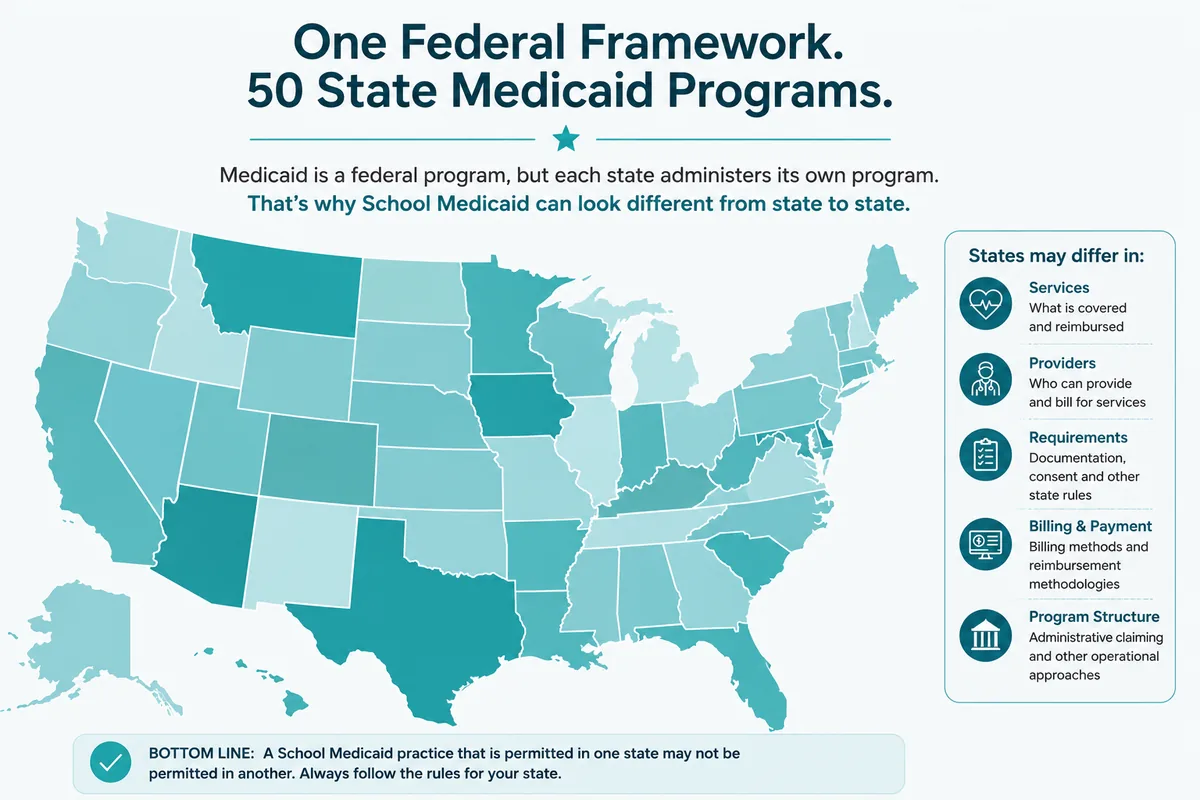
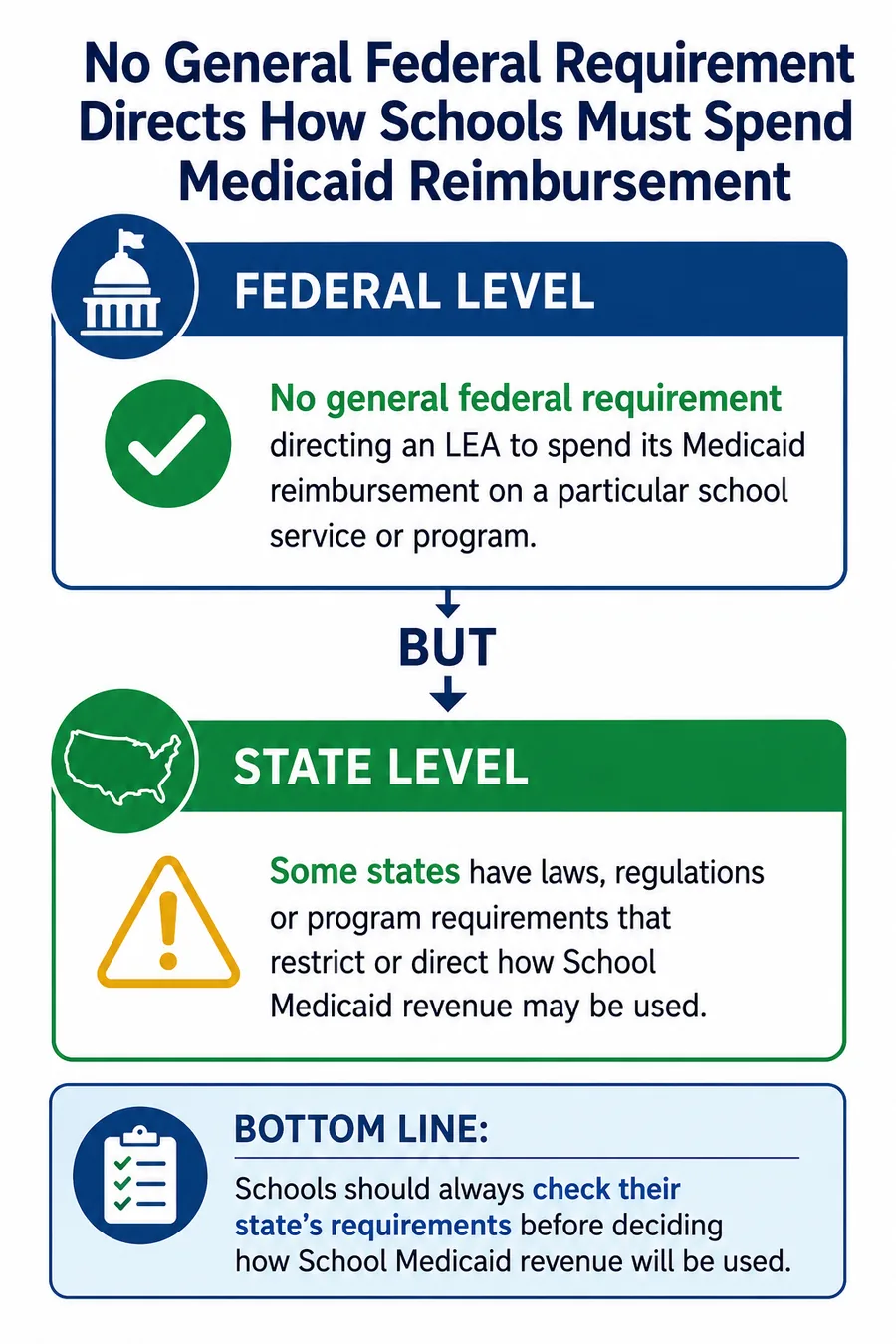
Because Medicaid is jointly funded by the federal government and the states and administered by states within federal requirements, School Medicaid does not operate identically across the country. States establish many of the specific requirements governing covered services, qualified providers, documentation, claiming methods and reimbursement.
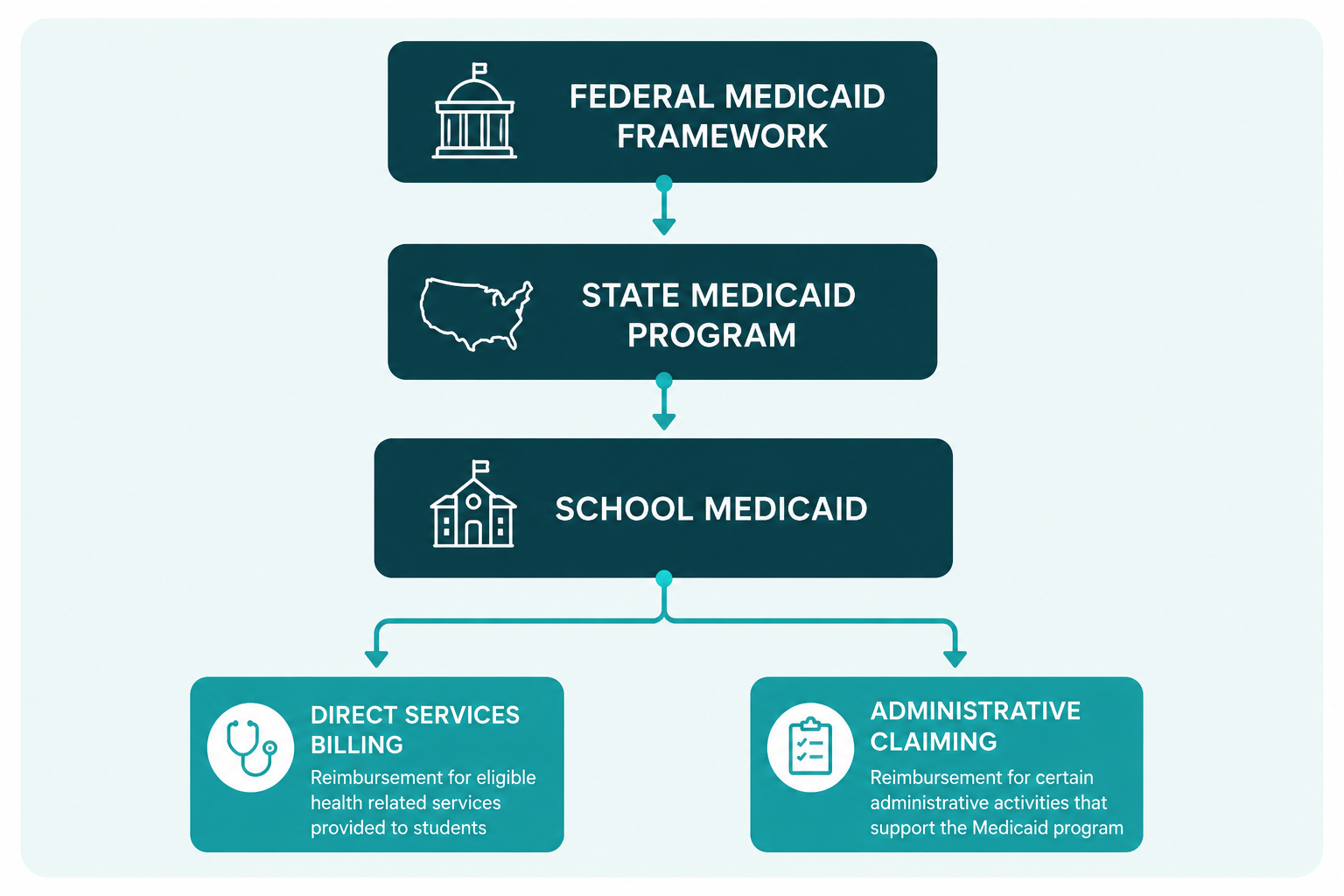
School Medicaid is not a separate federal Medicaid program. It is the application of Medicaid reimbursement within public education settings.
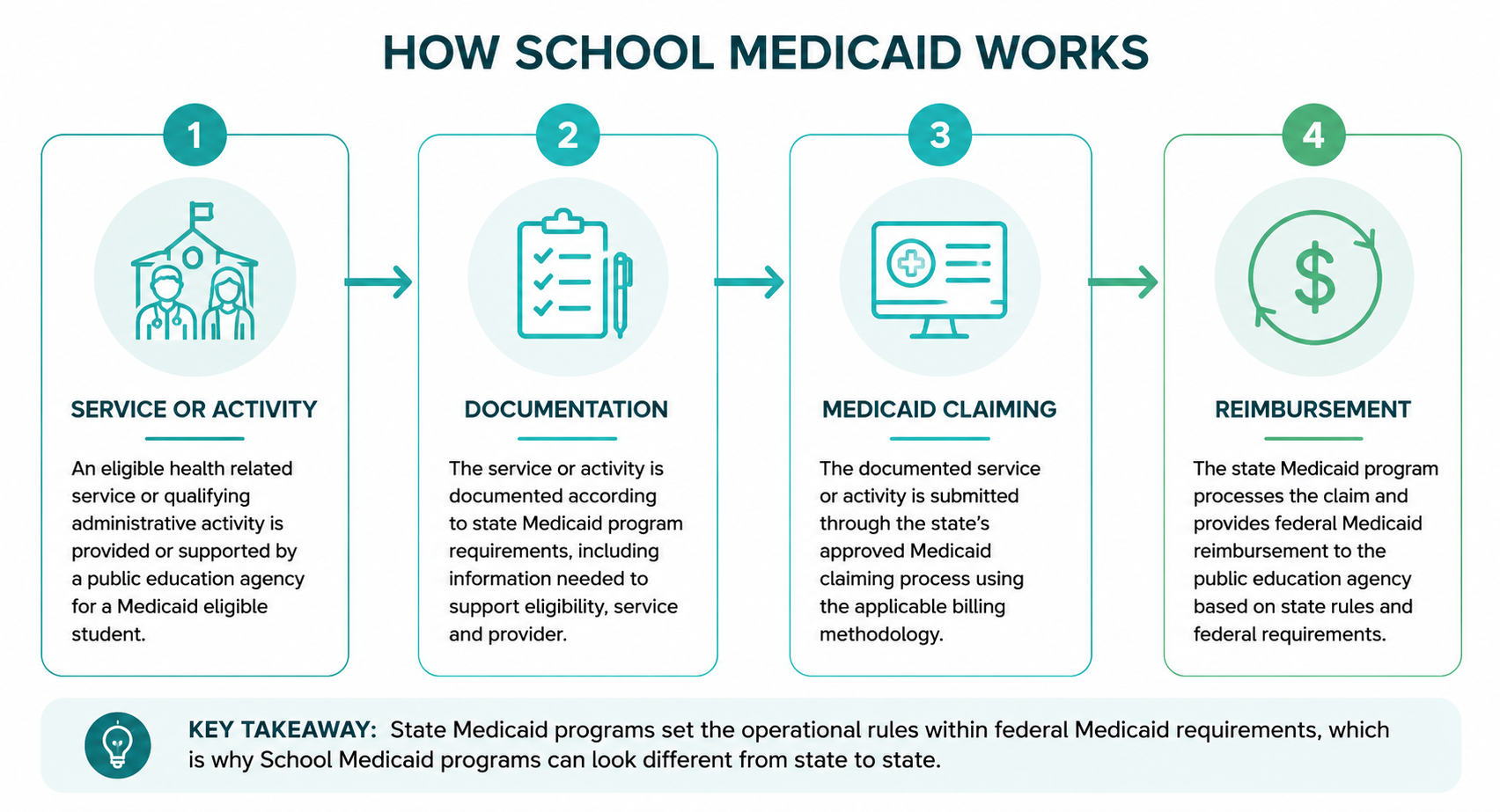
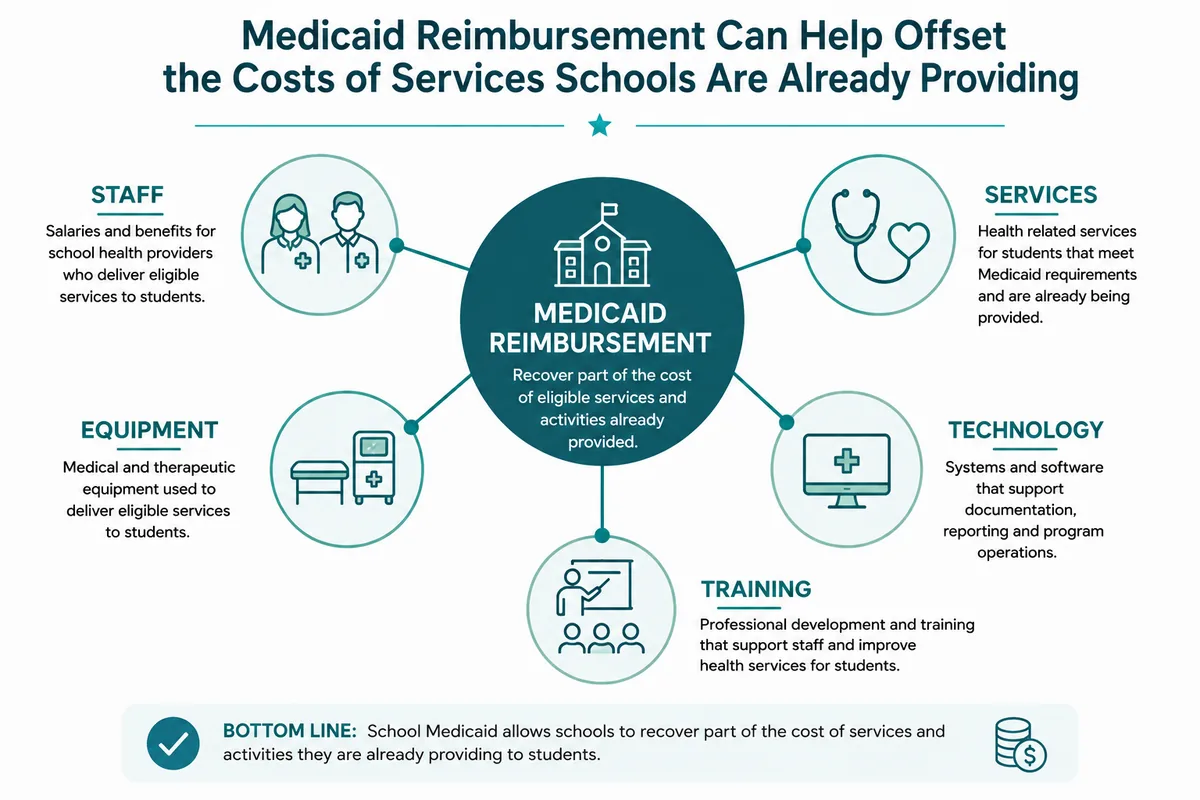
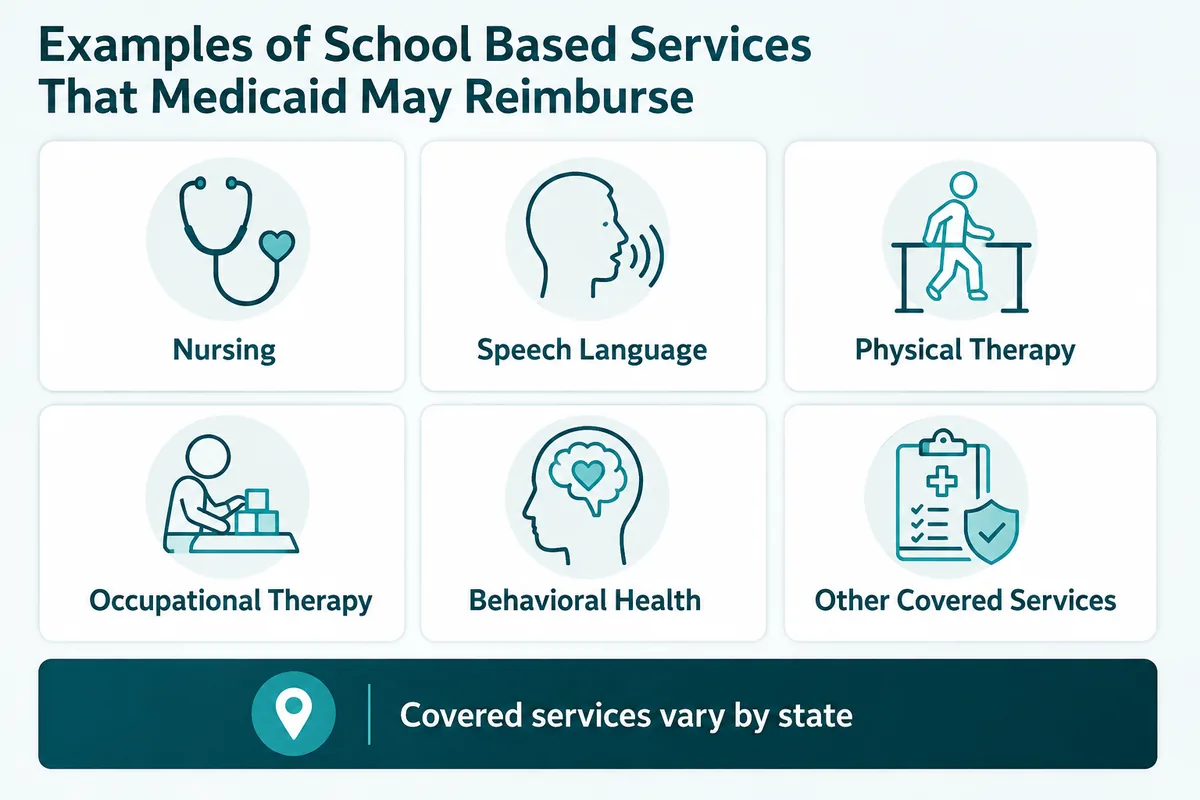
Medicaid can reimburse public education agencies for a variety of health related services provided to students when those services meet applicable Medicaid requirements.
Depending on the state, reimbursable services may include nursing, physical therapy, occupational therapy, speech language services, behavioral and mental health services, audiology, personal care services and other covered health services.
The specific services that can be reimbursed are determined by each state’s Medicaid program. States also establish requirements governing such things as provider qualifications, service authorization, documentation, billing and other conditions that must be met for reimbursement.
There is no single national list of school based services that Medicaid reimburses in every state. A service that is reimbursable in one state may be treated differently or may not be reimbursable through School Medicaid in another.
SCHOOL MEDICAID FAQ
Services & Reimbursement
Learn what services Medicaid may reimburse, how schools receive reimbursement, how Medicaid revenue can be used and who can provide reimbursable services.
SCHOOL MEDICAID FAQ
School Medicaid Compliance
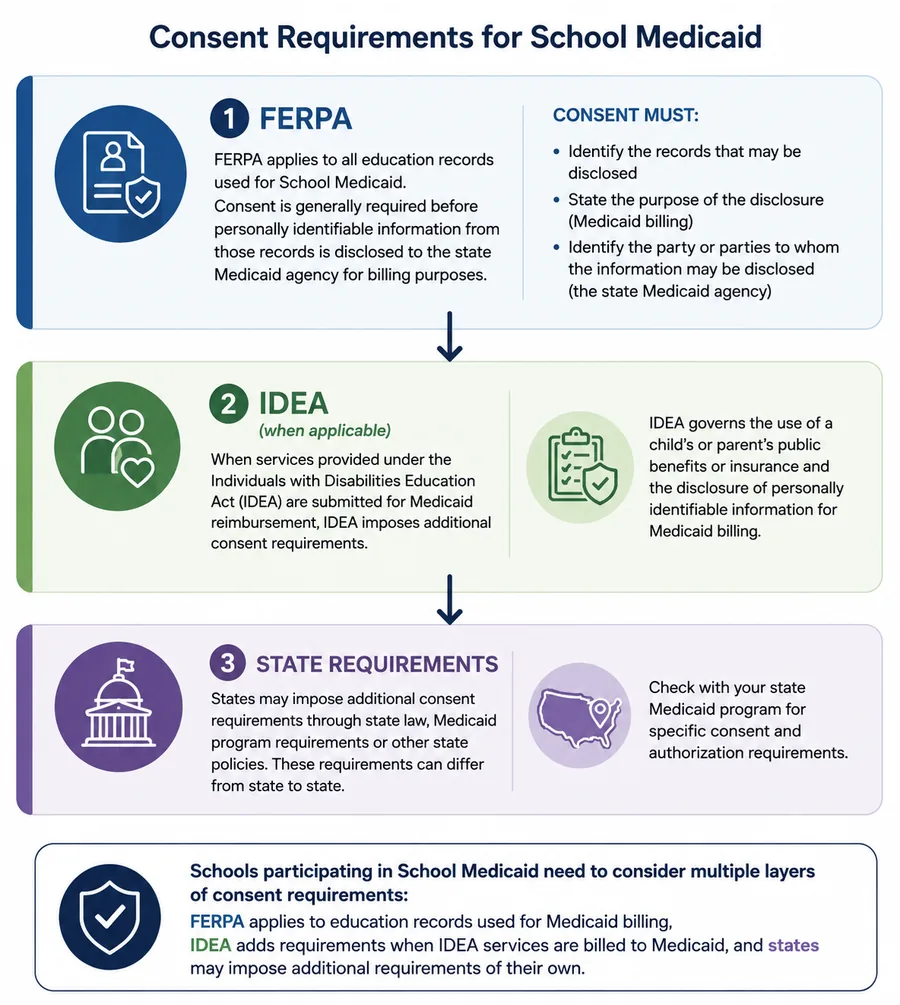
Understand the documentation, consent and oversight requirements that help schools maintain compliant School Medicaid programs.
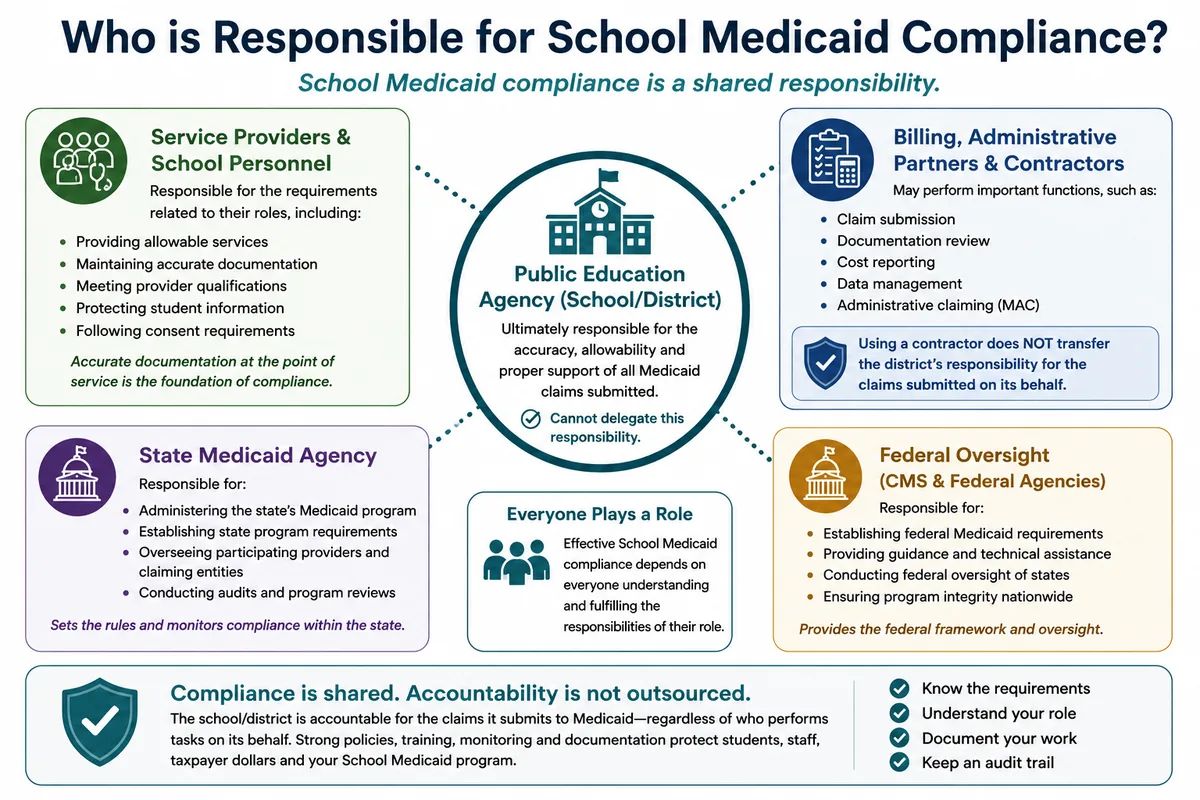
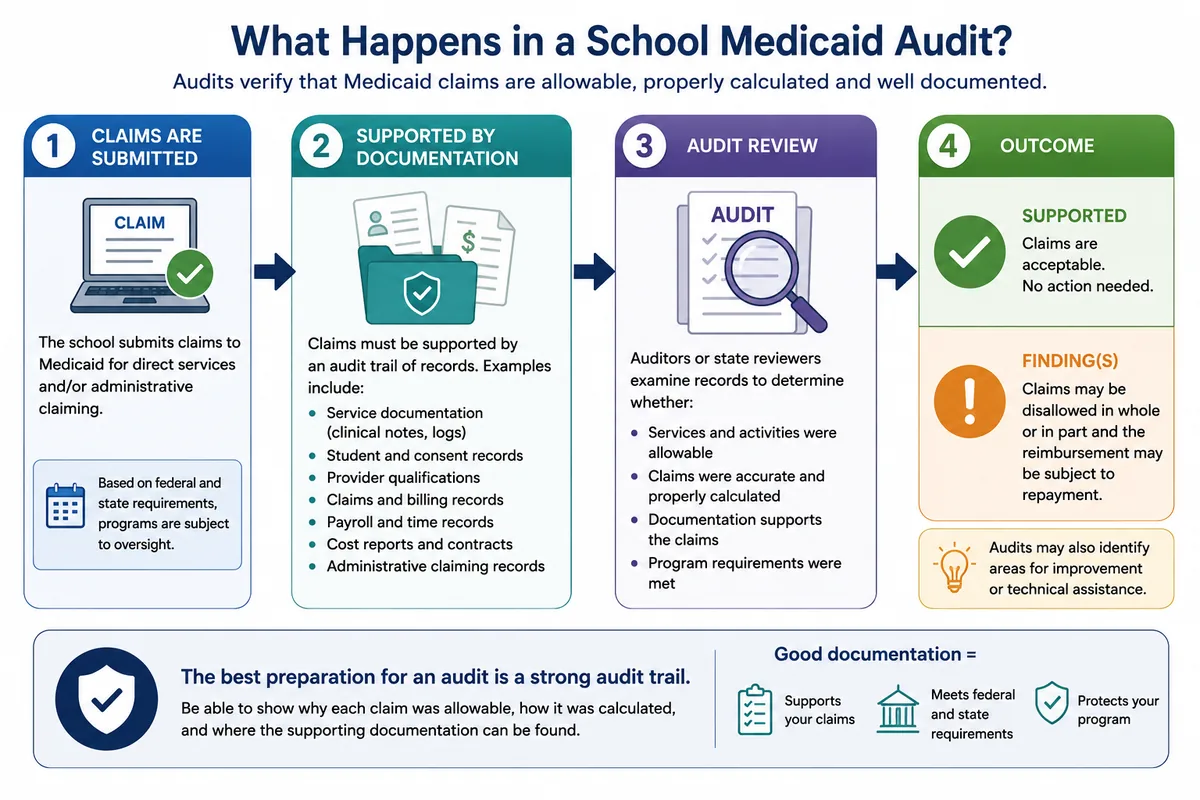
School Medicaid compliance is a shared responsibility. No single person or organization is responsible for every aspect of a School Medicaid program.
The public education agency is responsible for ensuring that the Medicaid claims it submits are accurate, properly supported and consistent with applicable program requirements. Individual service providers and other school personnel have responsibilities related to areas such as service delivery, documentation, provider qualifications and other requirements associated with their roles.
When schools use billing companies, consultants or other contractors, those organizations may perform important claiming, documentation, cost reporting or administrative functions. Using a contractor, however, does not transfer the school or district's responsibility for the claims submitted on its behalf.
The state Medicaid agency is responsible for administering the state's Medicaid program in accordance with federal requirements, establishing state program requirements and overseeing participating providers and claiming entities. Federal agencies, including the Centers for Medicare & Medicaid Services (CMS), provide federal requirements and oversight.
Effective School Medicaid compliance therefore depends on everyone involved understanding and fulfilling the responsibilities associated with their role.
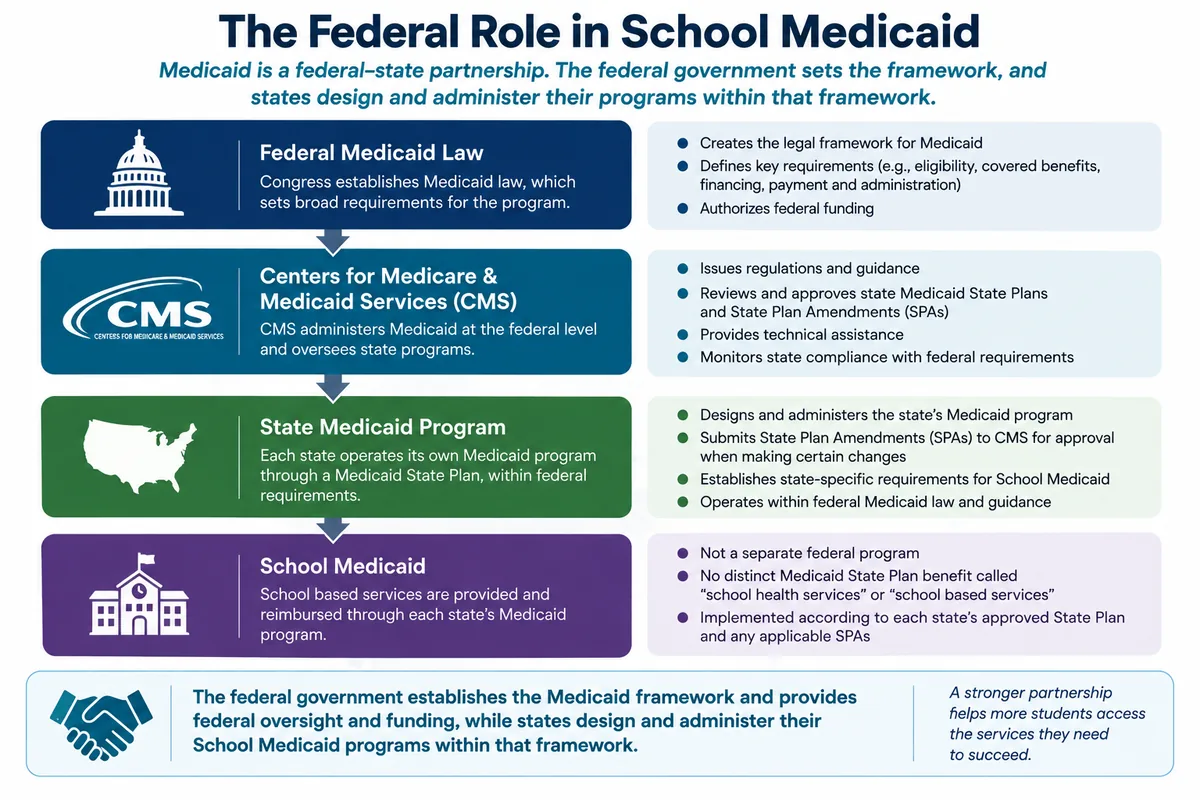
The federal government establishes the legal and regulatory framework within which state Medicaid programs, including School Medicaid, must operate.
Federal Medicaid law establishes requirements governing areas such as Medicaid eligibility, covered benefits, financing, payment and program administration. The Centers for Medicare & Medicaid Services (CMS) administers Medicaid at the federal level, issues regulations and guidance, provides technical assistance and oversees state compliance with federal Medicaid requirements.
Each state operates its Medicaid program through a Medicaid State Plan that describes the nature and scope of the state's program. When a state makes certain changes to its Medicaid program, it must submit a State Plan Amendment (SPA) to CMS for approval. School based services are provided and reimbursed within this broader state Medicaid program rather than through a separate federal School Medicaid program.
The federal government also provides a portion of the funding for allowable Medicaid expenditures. States receive federal financial participation when their Medicaid expenditures meet applicable federal requirements.
The federal government establishes the Medicaid framework and provides federal oversight and funding, while states design and administer their School Medicaid programs within that framework.
SCHOOL MEDICAID FAQ
Program Structure & State Requirements
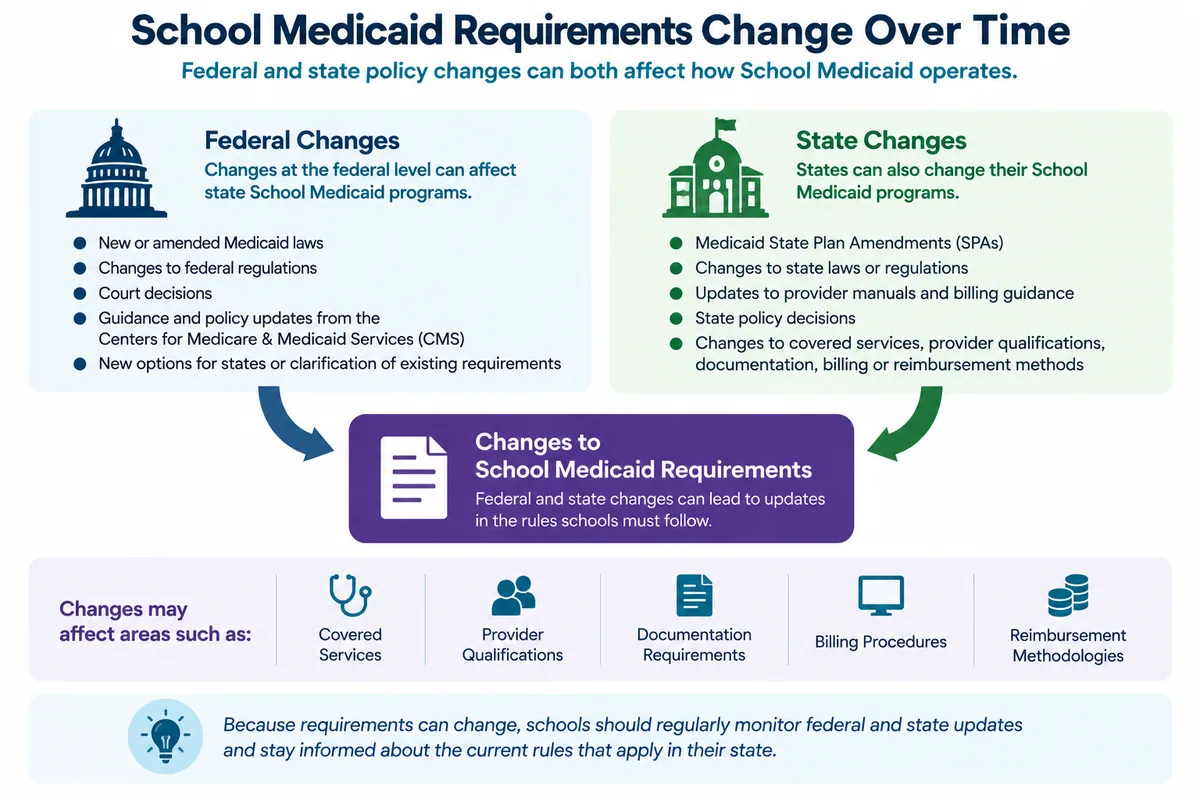
Understand how federal and state responsibilities shape School Medicaid, how program requirements are established and changed and where to find the rules that apply in your state.